Royally Redacted
Crown Princess Mette-Marit is mentioned over 1000 times in the Epstein files. Will this be enough to bring down the Norwegian monarchy?
The Epstein files are a never-ending Pandora’s box, owing to the infamous wealthy financier’s extent of connections to various elites. The prolific sex offender seems to have known almost everyone of political importance: U.S. presidents, billionaires, and members of royal families.
It is the latter category that has primarily drawn Norway into the centre of attention: Crown Princess Mette-Marit, prospective future Queen of the country, exchanged unexpectedly candid messages with Epstein (calling him, for example, her «crazy friend»).
I’ve been very surprised by how pro-monarchy Norway is.
Her involvement has inevitably implicated the entire Norwegian monarchical institute and fuelled new talks about a potential change to a republic.
Perceptions of the regime
A conversation of this magnitude is intriguing for international students navigating the country’s general sentiment towards its monarchy. Vilde Lunnan Djuve, a University of Oslo (UiO) researcher on political institutions and regime change, helps explain:
– Norwegians think of it as kind of in the background, a cute historical thing, and not something that matters for politics.
Cormac Lennon, a master’s student at UiO from Ireland, agrees:
– I've been very surprised by how pro-monarchy Norway is. Despite this, it seems to be more of a cultural thing, with a lot of my conversations on it stemming back to Haakon VII being a symbol of resistance during World War II.
Josefin Adman, another UiO master’s student from Sweden, offers an inter-Scandinavian viewpoint:
– I think the monarchy is a slightly bigger deal in Norway than in Sweden since they gained independence relatively recently and can be quite nationalistic, which would make the monarchy a symbol of national unity and pride in a way that doesn't quite exist in Sweden.
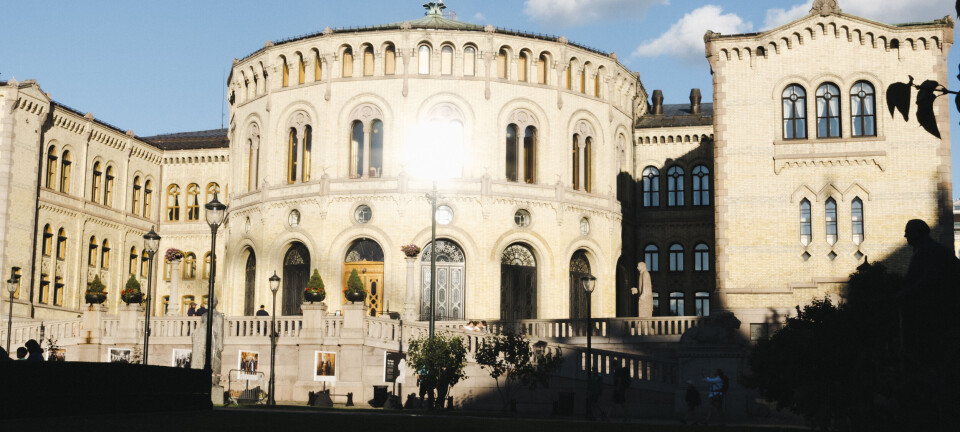
These perspectives are evidently confirmed by Stortinget, which recently voted to maintain the monarchy. For a process like that, slow and methodical change is key, as Djuve emphasizes:
– Monarchy and democracy in Norway have been the result of several reforms. The relationship between the crown and the parliament has been changed several times, but through reform. That's also how I think a gradual end to the monarchy would look here.
Clashes of past and present
An absence of historical precedents additionally affirms the previously mentioned notions of cultural and historical gravity that the monarchy has in the hearts of many Norwegians. For Djuve:
– Nostalgia and connection to the past are connected to the monarchy in general, even if most Norwegians would agree that it’s a strange thing for a modern democracy to have.

These outlined paradoxical clashes between past traditions and modern standards are also at the forefront for Josefin:
– Monarchy feels very outdated in our modern world, that wants to believe it works on democratic and meritocratic principles.
Reputational damage is nevertheless at play, even if time usually works in favour of stopping any initial scepticism. Djuve says that:
– When there's a lot of bad press and revelations that the rulers are doing things that Norwegians don't like, that can absolutely and cumulatively matter.
An issue of credibility
The Epstein revelations arrived at an extremely unfortunate time for Mette-Marit. Her son, Marius Høiby, is currently on trial for sexual abuse, domestic violence, and drug transportation.
Norwegians think of it as kind of in the background, a cute historical thing, and not something that matters for politics.
Even if the monarchy comes out of the scandal unscathed, the same cannot be said about the Princess’s public perception. In a pair of new polls by VG, 60.9% of Norwegians were in favour of the regime (down from 72% last year), while support for a potential republic comparably rose to 27.4% (by 10 points). In spite of that, 44% expressed disapproval (with 32.5% agreeing) to Mette-Marin becoming the next Queen of Norway. Djuve comments:
– That’s really interesting. I think, actually, a lot of Norwegians would be interested in voting for who should take over when King Harald dies. I've heard people say that it would be cool to let Princess Ingrid Alexandra take over right away, and just kind of skip this part with Crown Prince Haakon and Mette-Marit.
For this, Djuve draws an international parallel
– I know that's also been a sentiment in the U.K., after Queen Elizabeth II died, that they should have just skipped her son King Charles.
Cormac, who experienced the above directly while living in the U.K. at the time, corroborates this comparison:
– There was a lot of talk of skipping Charles and going to Prince William. There's definitely been a hit to the monarchy's image with Charles taking the throne. It's gotten the republic talks reinvigorated and I do think with succeeding generations, we'll have a more and more anti-monarchical side rise up.
Monarchy feels very outdated in our modern world.
At the end of the day, the issue of popular sentiment boils down to exactly, and simply, what people like. Djuve outlines that:
– Given the nature of the institution of monarchy, this sort of connection you have to the royal family is the only relevant thing, because it's kind of a nostalgic and sentimental issue.
In terms of what people think of Mette-Marit, however:
– I think this has more or less permanently changed